After 18 years of free in-home tests across the Carolinas and 732 five-star reviews (4.9 average), the contamination patterns we see are remarkably consistent by region: GenX and PFAS in the Cape Fear basin, chloramine and disinfection by-products in the Triangle, lead-solder risk in pre-1986 Charlotte and Greensboro housing, low pH and high iron in Western NC wells, and saltwater intrusion creeping into Upstate SC wells. The fix is rarely guesswork once a real water test is on the table. Book a free in-home test or call (984) 212-3558.
Aquafeel Solutions Carolina opened in 2007. Over 18 years we have logged 732 reviews at a 4.9-star average, held a BBB A+ rating since 2018, and built our crew around NSF 42, 44, 58, 61, and 372 certifications plus WQA credentials. We are veteran-owned, headquartered in Wake Forest, and cover North Carolina plus the upper SC market (Raleigh, Charlotte, Greensboro, Asheville, Greenville SC, Columbia, Spartanburg). Coastal SC is sister-territory and we refer those calls there.
Carolina water is not one problem, it is six or seven different problems that cluster by ZIP code. The contaminants are predictable once you know the geology and the utility behind the tap. Use this guide to figure out which pattern applies to your address before you talk to anyone, us included.
What 732 Carolina Water Tests Have In Common
Pull every test report we have logged since 2007 and four patterns repeat across regions:
- The water at the meter is not the water at the tap. Premise plumbing (the pipe between the curb and your kitchen faucet) reshapes water quality, sometimes more than the treatment plant does. Lead solder, copper corrosion, biofilm in dead-leg lines, and old galvanized steel show up in the kitchen even when the utility CCR looks clean.
- Visible problems are the minority. Roughly 7 of every 10 homes we test have at least one issue worth treating, but only 2 in 10 had a visible cue (stain, smell, taste) that triggered the call. The rest scheduled the test because a neighbor did.
- Seasonal swings are real. Triangle chloramine rises in summer with boost dosing. Cape Fear PFAS varies with river flow. Western NC well iron rises in late summer drought. A single snapshot test misses the shape of the year.
- Hardness rules appliance failures. Water heater, dishwasher, and coffee-maker calls all trace back to the same root in most NC and Upstate SC homes: 6 to 15 grains per gallon slowly destroying everything in the hot-water loop.
The region-specific patterns layered on top are what actually shape the equipment we recommend.
Cape Fear Basin: PFAS And GenX Are Not Going Away
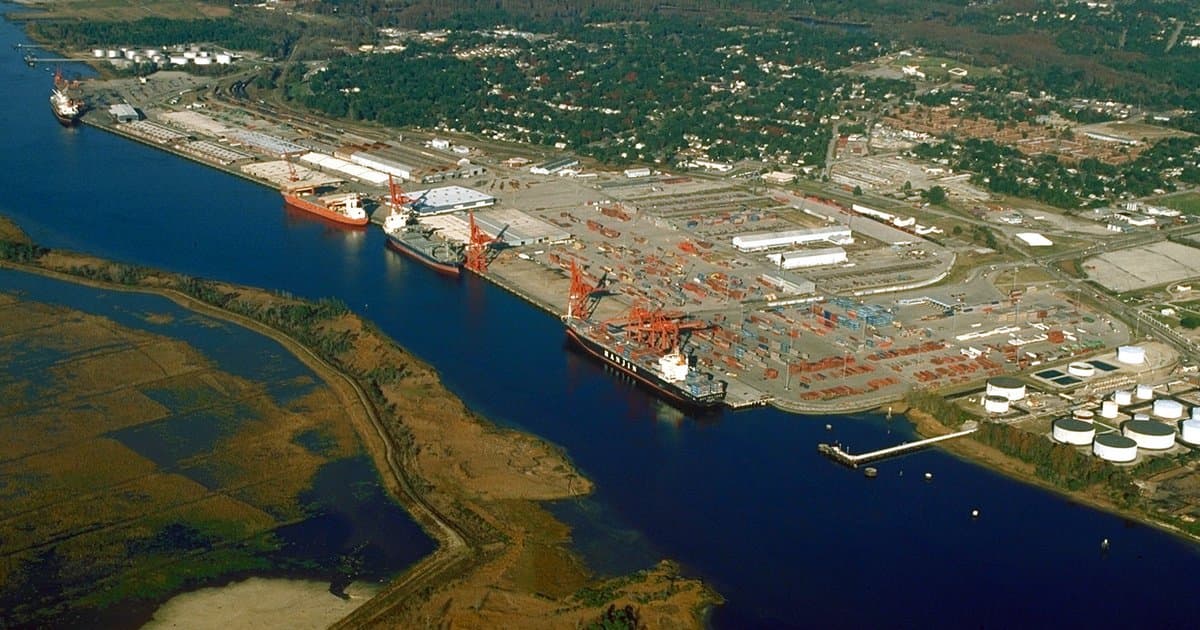
If you are in Wilmington, Brunswick County, Leland, Hampstead, or anywhere served by Cape Fear Public Utility Authority (CFPUA) or Brunswick County Public Utilities, the long-running PFAS story is the one to know. Chemours' Fayetteville Works plant discharged GenX and related per- and polyfluoroalkyl substances into the Cape Fear River for decades. The chemicals migrate downstream into the lower basin's raw water intakes.
CFPUA brought a granular activated carbon (GAC) system online at the Sweeney Plant in 2022, which removes most regulated PFAS before the water leaves the plant. The complications: GAC media has to be regenerated on a schedule, some short-chain PFAS pass through less efficiently than long-chain compounds, and EPA finalized enforceable MCLs for six PFAS in April 2024 (PFOA and PFOS at 4 ppt individually, PFHxS, PFNA, and HFPO-DA at 10 ppt, with a Hazard Index for mixtures). Utilities have until 2029 to comply.
The practical answer in the basin is layered: trust the GAC at the plant for long-chain compounds, then add a certified point-of-use reverse osmosis system at the kitchen for short-chain PFAS, GenX, and the trace residual. NSF/ANSI 58 with the P473 PFAS-reduction claim is the spec to look for. Our reverse osmosis service page walks through the configurations we install in Wilmington and Brunswick County, and the Cape Fear PFAS removal guide covers the regulatory timeline.
The Triangle: Chloramine, Disinfection By-Products, And A Wake County Well Belt
Raleigh, Durham, Cary, Apex, Wake Forest, Holly Springs, and Chapel Hill draw from surface reservoirs (Falls Lake, Jordan Lake, Lake Michie, Cane Creek) and disinfect with chloramine. Chloramine produces fewer regulated trihalomethanes than free chlorine, which is why most large NC utilities switched. The trade-off: chloramine forms nitrosamines and other unregulated byproducts, and it is harder for fish-tank owners and dialysis patients to remove.
The chloramine signature in our Triangle tests reads 2.5 to 3.5 mg per liter at the tap. Standard activated carbon removes it slowly; catalytic carbon (the Vortech configuration we install) removes it at four-bathroom flow rates. Our whole-house filtration page covers carbon-bed sizing, and the Charlotte chlorine-smell diagnostic walks the same chemistry.
Just outside the Wake County municipal boundary is a thick ring of private wells (Rolesville, Knightdale, Wendell, Garner, parts of Apex, Pittsboro, Hillsborough). The Piedmont geology under these wells releases iron, manganese, and occasionally uranium or radon. The Raleigh well iron and manganese guide and the Piedmont granite testing guide cover what we look for.
Charlotte And Mecklenburg County: Soft Water, Lead Solder, And Pre-1986 Risk
Charlotte Water draws from Mountain Island Lake and Lake Norman, finishing at the Franklin and Vest plants. Raw-water hardness runs low (around 30 to 40 mg per liter as CaCO3, roughly 2 to 3 grains per gallon). After pH adjustment, finished Charlotte water is soft enough that scale problems are rare; the surprise is the corrosion direction. Soft, slightly aggressive water can leach copper from older pipes and lead from pre-1986 solder joints.
The federal Lead and Copper Rule sets a 15 ppb action level. EPA's October 2024 LCRI requires lead-service-line replacement within 10 years and tightens the action level to 10 ppb in 2027. Charlotte Water is inventorying service lines under the mandate, and pre-1986 homes in Dilworth, Plaza Midwood, Elizabeth, Wesley Heights, and the older inner-ring neighborhoods are the highest-risk addresses. The NC Lead and Copper Rule update covers what changed.
For Charlotte homeowners, two readings decide everything: first-draw lead at the kitchen tap (after 6-hour stagnation) and copper. Lead above 5 ppb or copper above 0.5 mg per liter points to a kitchen-tap RO at minimum. The same pattern applies in Greensboro, Winston-Salem, and older Asheville housing.
Western NC And The Asheville Wells: Low pH And Heavy Metals
Asheville municipal water (North Fork Reservoir, Mills River) is some of the softest in the state, around 1 to 2 grains per gallon, with naturally low pH. The municipal system corrects pH at the plant; private wells in Buncombe, Henderson, Madison, and the broader WNC region usually do not. Wells in the Blue Ridge metamorphic terrain commonly read pH 5.5 to 6.5, well below the EPA secondary range of 6.5 to 8.5.
Acidic well water is the workhorse problem in WNC. It leaches copper (blue-green sink stains), drops lead from older solder, and corrodes water heater anode rods within a few years. Treatment: a calcite contactor (or soda-ash injection where calcite is undersized) lifts pH ahead of any iron or carbon stage. The harder fix is iron and manganese at the same time as low pH, because manganese will not drop out until pH is above 7.5. Staging matters more than equipment brand here.
Upstate South Carolina: Saltwater Intrusion And The Anderson Well Belt
Greenville, Spartanburg, Columbia, Rock Hill, and Anderson are our Upstate SC service ZIPs. Municipal water runs moderate hardness (4 to 8 grains per gallon). The pattern we see most on Upstate SC wells, especially in the Anderson and rural Greenville County belts, is chloride creep: sustained drought plus shallow wells in the Saluda basin can pull brackish water from deeper formations, raising sodium and chloride where neither showed up five years ago.
Saltwater intrusion on the coastal plain is a different problem and we refer those calls to Solomon Home Water. Inland chloride creep is treatable: RO at the point of use handles drinking and cooking. Whole-house chloride removal is rare and reserved for irrigation. Our Greenville SC service page and the South Carolina hub cover install protocols.
Recommended Method By Region
| Where you live | Most likely issue | Recommended starting point |
|---|---|---|
| Wilmington, Leland, Hampstead, Brunswick County | PFAS, GenX, short-chain compounds | NSF 58 + P473 reverse osmosis at the kitchen, with carbon prefilter (RO service) |
| Raleigh, Cary, Apex, Durham, Chapel Hill (city water) | Chloramine, disinfection by-products | Catalytic-carbon whole-house filter sized for flow (whole-house filtration) |
| Wake Forest, Rolesville, Knightdale, Pittsboro (well water) | Iron, manganese, occasional uranium | Air-injection iron filter + carbon polish (well water treatment) |
| Charlotte, Mecklenburg County (pre-1986 homes) | Lead solder, copper corrosion | First-draw lead test, then RO at the kitchen (Charlotte service page) |
| Asheville, Hendersonville, Brevard (well water) | Low pH, copper leaching, iron | Calcite contactor + iron filter + softener (well water service) |
| Greensboro, Winston-Salem (older housing) | Hardness + lead-solder risk | Softener + RO at the kitchen tap (water softener service) |
| Greenville SC, Spartanburg, Columbia, Anderson | Moderate hardness, occasional chloride | Softener + carbon, RO if chloride is detected (Greenville SC page) |
Get Your Free In-Home Water Test
What We Will Not Recommend (And Why)
After 18 years we have a list of categories we have stopped installing in Carolina homes, even when customers ask for them by name:
- Magnetic and electronic "descalers." No NSF certification exists for hardness reduction by magnetism, and our own field tests showed identical scale buildup before and after. AWWA published a 2020 review reaching the same conclusion.
- Salt-free conditioners on water above 15 grains per gallon. Template-assisted crystallization works at low to moderate hardness, but in WNC and rural Wake County where hardness climbs above 18 gpg, true ion-exchange is the only reliable path.
- Whole-house RO for typical residential use. RO is a precision point-of-use tool. Whole-house RO wastes 60 to 80 percent as reject, demineralizes below healthy fixture levels, and requires repressurization. It belongs in industrial and lab applications.
- Cartridge-only iron filters above 1 mg per liter. Cartridges load up within weeks on real Piedmont iron. The dollar-per-gallon math always favors a tank-based oxidation stage above 1 mg per liter.
The certifications page (NSF 42, 44, 58, 61, 372, plus WQA) lists the floor we will not install below.
Call A Professional If Any Of These Apply
- You are in the Cape Fear basin and have not tested for PFAS in 24 months. EPA's April 2024 final MCLs reshaped the threshold list.
- Your home was built before 1986 and you have never had first-draw lead testing at the kitchen tap. The federal LCR action level drops to 10 ppb in 2027.
- Your water pH reads below 6.5 or above 8.5. Both directions are corrosive to specific materials.
- You have visible iron staining and your test is more than 12 months old. Iron load shifts with seasonal water-table depth in the Piedmont.
- You are on a well closer than 100 feet to a septic drain field, livestock yard, or row-crop application. Run the full bacteriological and nitrate panel every year.
- You are buying a home with a water-treatment system already installed. Half the inherited systems we audit are mis-sized, mis-configured, or running on dead media.
- Your utility CCR shows a recent boil-water notice, lead-service-line discovery, or PFAS detection in 24 months. Local detections deserve a local point-of-use response.
What Our Carolina Install Actually Looks Like
For the standard Carolina house (single-family, 3 to 4 bathrooms, public water or a single well), the timeline runs:
- Free in-home test (30 to 45 minutes). A WQA-certified technician runs pH, hardness, iron, manganese, chloride, alkalinity, chlorine or chloramine, and TDS on-site, then routes the sample to a state-certified lab for anything the on-site kit cannot resolve (lead, PFAS, nitrates).
- Configuration recommendation (same visit). The technician walks through the readings and the staging logic, and explains which system configurations fit your water profile.
- Install day (one visit, 4 to 6 hours). Whole-house equipment goes in at the point of entry. RO goes under the kitchen sink with a dedicated faucet. Drain lines route per NC plumbing code.
- Walkthrough and warranty registration. 25-year structural warranty on Vortech mineral tanks, media warranties per manufacturer, and labor coverage on our work.
- Annual service review. The technician swaps RO membranes and prefilters on the recommended cadence; salt top-ups are the homeowner's job.
The warranty page covers the 25-year terms and the about page covers our history and veteran-owned credentials.
Frequently Asked Questions
How is Aquafeel different from a national franchise like Culligan or Kinetico?
Three things. First, we are local: 18 years in the Carolinas, headquartered in Wake Forest, with crews who know the specific geology behind every ZIP code we serve. Second, our 25-year structural warranty on Vortech tanks is among the longest in the industry. Third, we are veteran-owned and our reviews (732 at a 4.9 average) reflect a referral-driven business, not a marketing-driven one.
Do you cover all of North Carolina and South Carolina?
We cover all of North Carolina and the upper South Carolina market (Greenville, Spartanburg, Columbia, Rock Hill, Anderson). Coastal SC (Charleston, Hilton Head, Myrtle Beach) is sister-territory and we refer those calls to Solomon Home Water. Our service areas page shows the full city list with linked service pages.
Is the in-home water test really free, or is there a hidden charge?
It is free, with no obligation. A WQA-certified technician runs the test, explains the results, and quotes equipment if you want one. If you decide not to install anything, you keep the test results and we leave. The 732 reviews on our profile reflect the no-pressure approach being the actual approach.
How long until I notice a difference after installing a system?
Whole-house carbon and softener changes are usually noticeable within 24 to 48 hours: softer shower feel, no chlorine or chloramine taste, no scale on glass shower doors. RO at the kitchen tap is immediate at first use. Iron filters on stained porcelain take 2 to 4 weeks for new water to flush the staining residue, but the staining stops accumulating on day one.
What is included in the 25-year warranty?
Vortech mineral tanks (the structural pressure vessels at the core of our whole house systems) carry a 25-year structural warranty against leaks, corrosion, and pressure failure. Media inside the tanks has separate manufacturer warranties (typically 5 to 10 years). RO membranes carry a 2-year warranty. Our labor covers the install and one-year follow-up. The warranty page documents the exact terms.
Do I need to test my Carolina water if my utility says it meets EPA standards?
Yes. EPA compliance is measured at the plant boundary, not at your kitchen tap. Premise plumbing (lead solder, copper corrosion, dead-leg biofilm, particulate from main-break repairs) reshapes the water between the meter and the faucet. About 7 in 10 homes we test on city water in the Carolinas have at least one issue worth treating that the utility CCR does not disclose.
Ready To Find Out What Is In Your Carolina Water?
Eighteen years and 732 reviews later, the question we still answer most often is the same one from 2007: what is in my water, really? The answer is on the table in 45 minutes. Schedule a free in-home test, call (984) 212-3558, or browse the water treatment hub. Regulatory background: EPA Drinking Water Regulations, NC DEQ, NC DHHS Well Water, USGS Water Quality, and CFPUA.