Approximately 2.4 million North Carolina residents, roughly 24% of the state's population, rely on private wells for their drinking water. That's one of the highest well-dependent populations in the Southeast. NC requires bacterial and chemical testing only within 30 days of new construction; after that, no mandated ongoing testing exists. This creates a systemic gap, and nowhere in NC is that gap more consequential than in the Piedmont granite belt, where naturally occurring radionuclides make testing a health-priority issue.
The Rolesville Batholith
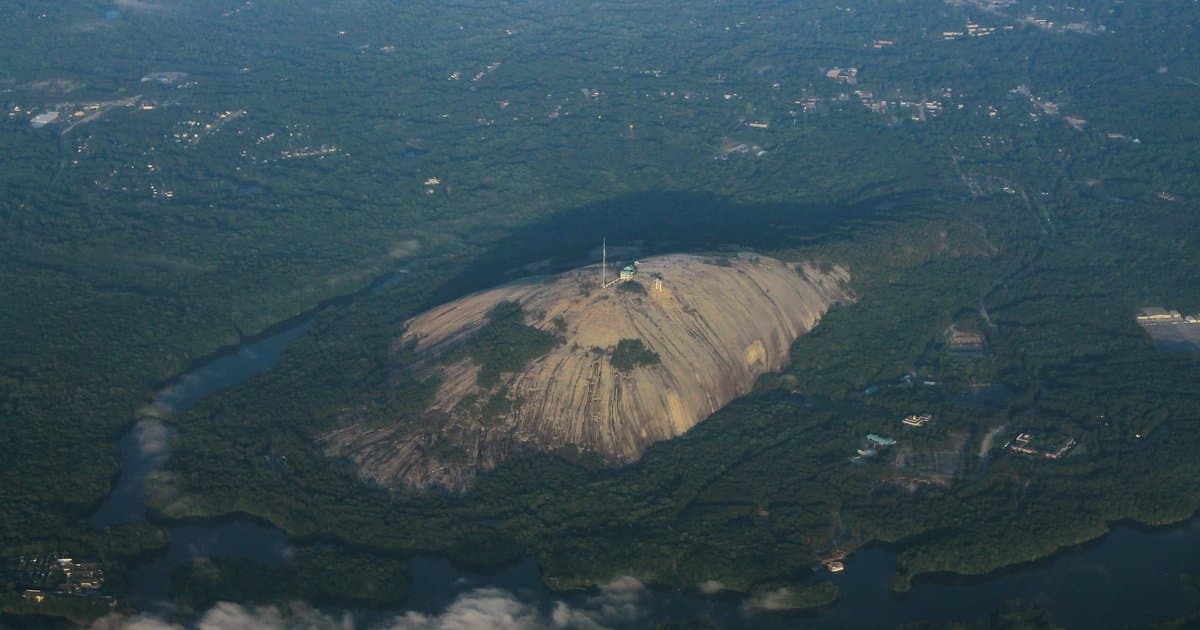
Eastern Wake County, most of Franklin County, and parts of Johnston and Nash Counties sit atop the Rolesville batholith, the largest granite body in the southern Appalachians, roughly 15 miles by 50 miles, approximately 300 million years old. Granite in this batholith contains elevated concentrations of uranium and associated decay-chain elements: radium, radon, and their daughter products. When groundwater moves through granite fractures, it picks up these radionuclides.
The Magnitude
Estimated 4,000–6,000 Wake County wells (approximately 1 in 5 wells in eastern Wake County) exceed EPA safe drinking water levels for uranium or radium. Some readings are 10–20× the standard, not marginal exceedances. Affected counties: Wake (eastern portion), Franklin, Johnston (parts), Nash (parts).
Health Concerns
Uranium: primarily kidney toxicity; also a low-level carcinogen. Radium: bone cancer risk from long-term ingestion. Radon: primarily a lung cancer risk from inhalation (showering, dishwashing steam) rather than drinking.
NCDHHS Recommended Testing Schedule
Annually: coliform bacteria + E. coli. Every 2 years: inorganic panel (nitrate, lead, arsenic, fluoride, iron, manganese, sulfate, hardness, pH, TDS). Every 5 years (Coastal Plain/granite wells): radium, uranium. As warranted: VOCs, pesticides, PFAS, 1,4-dioxane.
Testing Through NC State Laboratory
The NC State Laboratory of Public Health accepts private-well samples for bacteriological, inorganic, radionuclide (uranium, radium, radon), and specialty panels (VOCs, PFAS, 1,4-dioxane). Panels are billed separately by category; contact the lab or your county extension for current per-panel fees.
Treatment Options
Uranium and radium: ion exchange (anion for uranium, cation softener for radium, dual-purpose with hardness). Reverse osmosis: effective for both, point-of-use drinking water application. Radon: aeration (most effective for whole-house) or granular activated carbon with ventilation design.
What to Do
Look up your well location, if in Wake (eastern), Franklin, Johnston (parts), or Nash (parts), Rolesville batholith geology applies. Schedule an annual bacterial test. Every 2 years, run a comprehensive inorganic panel. Aquafeel Solutions Carolina performs in-home water testing across North Carolina's Triangle, Triad, Charlotte metro, and surrounding areas. We coordinate with certified labs for uranium, radium, and other specialized testing.