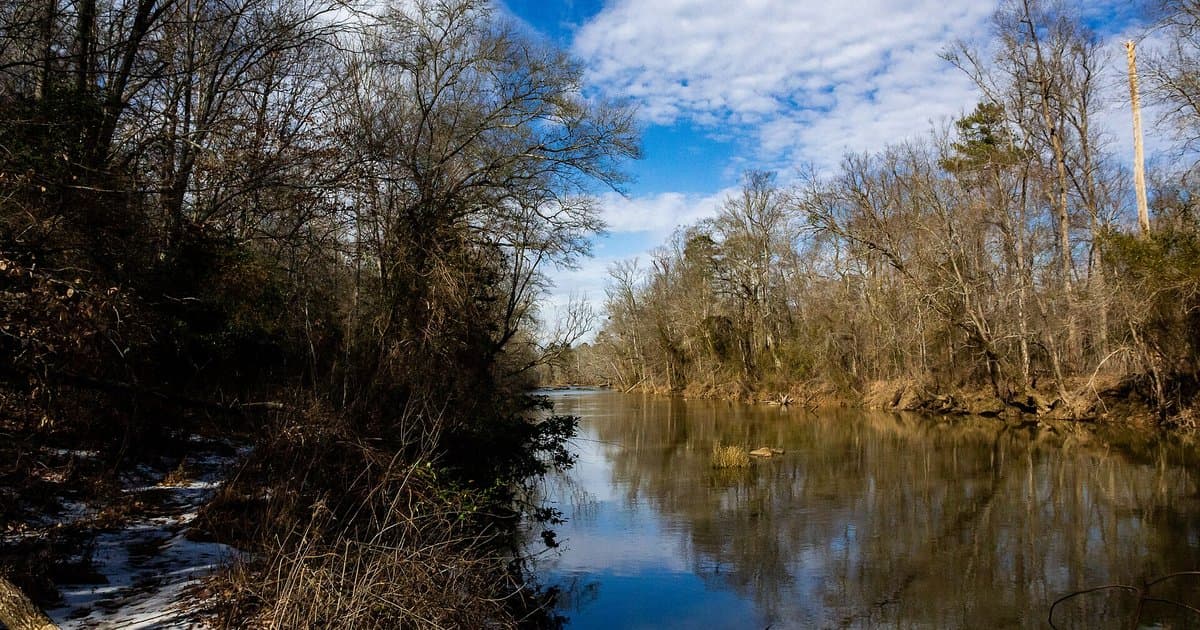
1,4-dioxane is a synthetic industrial solvent, probable human carcinogen, widely used in the production of other chemicals, solvents, and some personal-care products. It reaches North Carolina drinking water through industrial discharges that pass through wastewater treatment plants into surface water used downstream for drinking water supply. Pittsboro, which draws its drinking water directly from the Haw River, has been the canary in the coal mine. In August 2024, during an upstream discharge event, Pittsboro's finished drinking water measured 107 parts per billion of 1,4-dioxane, more than three times the EPA's 35 µg/L drinking water health advisory.
What 1,4-Dioxane Is
A clear, slightly sweet-smelling industrial solvent. EPA categorizes it as a "likely human carcinogen" based on animal studies showing liver and nasal cavity tumors. Key EPA exposure thresholds: risk-specific dose (1-in-1,000,000 cancer risk) = 0.35 µg/L; drinking water health advisory (1-in-10,000 risk) = 35 µg/L; no federal MCL currently in force.
The Upstream Sources
Burlington South WWTP measured 545 ppb 1,4-dioxane on January 23, 2024, catastrophically high. Greensboro, Reidsville, and Asheboro are identified contributors. Asheboro WWTP received NC DEQ-added 1,4-dioxane limits in August 2023. The August 2024 Greensboro discharge that spiked Pittsboro to 107 ppb illustrates the vulnerability: contaminated water traveled downstream through the Haw River and reached Pittsboro's intake.
The Regulatory Ping-Pong
NC DEQ attempted to impose 1,4-dioxane limits through NPDES permits on Asheboro, Greensboro, and Reidsville. August 2023: DEQ added limits to Asheboro's permit. September 2024: NC Chief ALJ struck down state limits following a lawsuit by the three cities. January 2025: EPA intervened. February 2026: NC judge upheld state limits, reversing September 2024. As of April 2026, the state limits are upheld. Given the litigation history, verify current status before making decisions based on regulatory outlook.
Why Standard Carbon and RO Underperform
1,4-dioxane is small, hydrophilic, and weakly adsorbing. Standard GAC: marginal removal, typically 30–60%, drops further with age. Reverse Osmosis: 50–80% removal, the molecule is small enough that significant fractions pass through standard membranes. Boiling: does not work (boiling point 101°C nearly identical to water).
What Actually Works
EPA-recognized Best Available Technology for 1,4-dioxane is Advanced Oxidation Processes (AOP): UV/H₂O₂ or ozone/H₂O₂ generate hydroxyl radicals that destroy 1,4-dioxane molecules, achieving >99% removal. Currently more common at utility scale than home level. Specialty residential UV/H₂O₂ systems are emerging.
What Haw River Basin Residents Should Do
Stay informed via Pittsboro public works notifications. When 1,4-dioxane spikes are announced, use bottled water for drinking and cooking. Residential AOP systems are technically possible but expensive. For most households, bottled water during verified high-exposure periods is the practical approach. Aquafeel Solutions offers free in-home water testing across North Carolina.